Schedule
Daily Tasks
What are your main responsibilities?
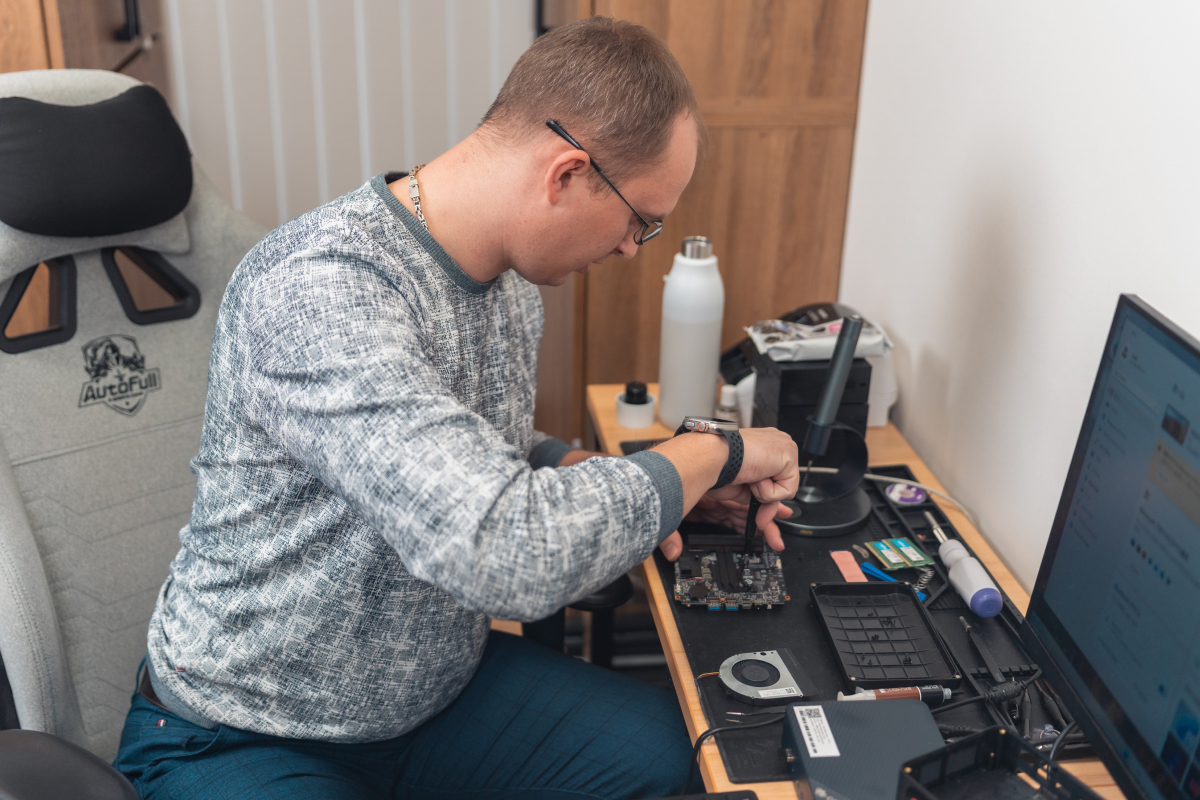
As the Systems Administrator, I’m responsible for maintaining and improving the company’s entire IT infrastructure across multiple locations. My work includes managing our Windows Server and Active Directory environment, maintaining cloud-hosted services, designing and supporting network infrastructure, deploying and managing employee devices, and ensuring the stability and security of all critical systems. I also handle incident response, day-to-day troubleshooting, and long-term planning so the company can operate smoothly without interruptions.
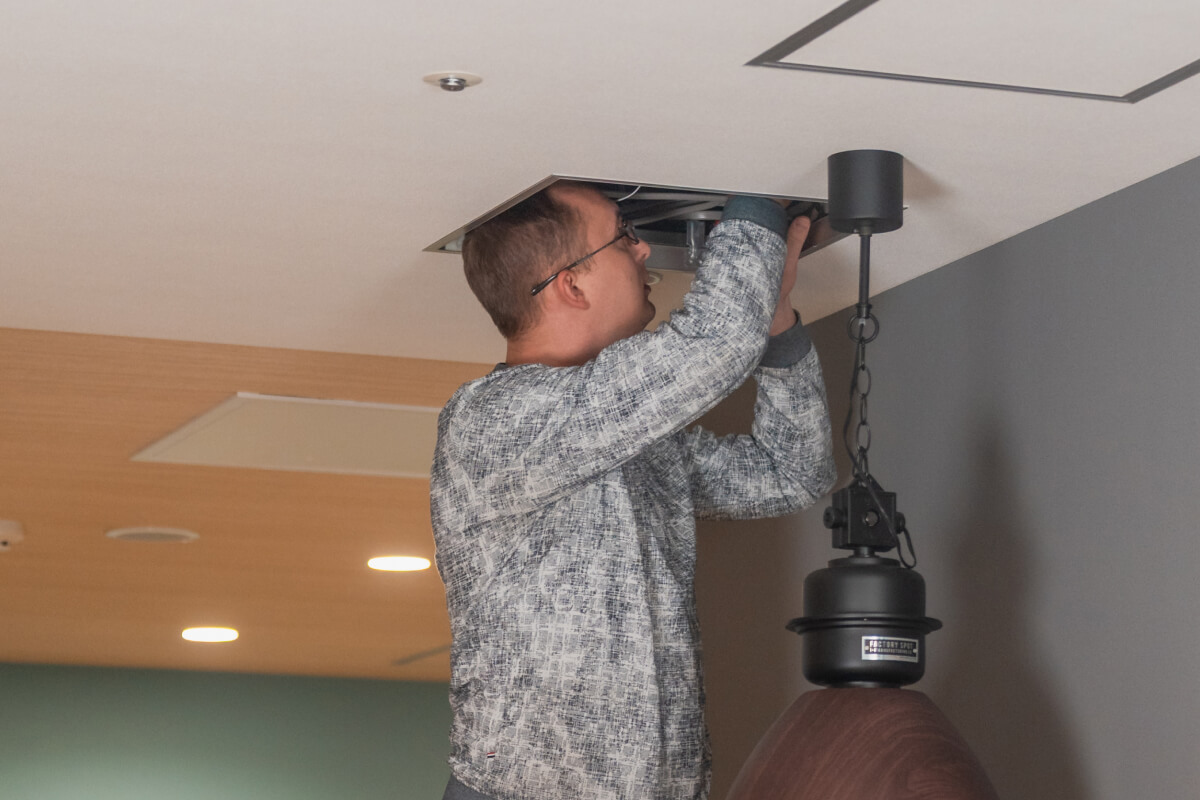
Some days I’m responsible for other housekeeping tasks around the office—fitting new power outlets, routing network or electrical cables in the ceiling or under the flooring, managing camera systems, repairing broken electronics (computers, barcode scanners, cell phones, you name it), etc. You can say I’m running a one man army, so I tend to get pretty busy.
Looking ahead, I’m focusing on strengthening our security posture, improving automation, and building a more resilient environment for disaster preparedness and business continuity. Supporting the entire company through reliable technology is both my role and the part of the job I enjoy most.
Which tools and platforms do you use daily?
I manage a hybrid environment, so the tools I use cover both on-premises and cloud systems. On a daily basis I work with Windows Server/Active Directory, AWS, Google Cloud services, UniFi networking platforms, and various internal systems such as our company wiki and asset-management tools. I also use monitoring and management utilities, virtualization tools, and a variety of administrative consoles to keep our systems running reliably for all employees. Sometimes I make small script based tools to simplify certain workflows.
How do you prioritize your tasks?
I prioritize based on impact and urgency. Anything that affects business operations, communication, or employee productivity takes top priority and is addressed immediately. After that, I focus on scheduled maintenance, infrastructure improvements, and ongoing projects that strengthen our long-term stability and security. I also review logs and system status each morning to identify potential issues early, so problems can be prevented before they affect the company.
Team Collaboration
What’s your team like?
Although I work independently as the company’s Systems Administrator, I function as a central support point for all departments. Instead of a traditional IT team structure, my role is to oversee the entire infrastructure myself – from servers and networks to devices and cloud services. This gives me a complete understanding of how all our systems connect, and allows me to respond quickly when support is needed.
What are the unique points about your team?
The unique part of my role is that I cover the full scope of IT operations on my own. This means I’m involved in everything: planning, execution, troubleshooting, security, and long-term improvement. It allows decisions to be made quickly and ensures consistency across our systems. Because I oversee the entire environment directly, I can spot issues early and maintain a stable, predictable infrastructure for the whole company.

Do you collaborate with other departments at ZenGroup?

I work closely with almost every department since IT supports all parts of the business. This includes operations and logistics teams at each site, administration and HR, accounting, warehouse teams, and executive management. Whether it’s deploying new systems, improving workflows, or solving technical issues, I coordinate with the relevant teams to make sure technology supports their work effectively.
Learning and Development
How do you stay updated on the latest trends in your position?
I keep up with new technologies by actively following industry news, security advisories, vendor documentation, and technical communities. Because IT changes quickly, I regularly review updates from Microsoft, Google Cloud, AWS, and UniFi to stay ahead of potential issues and understand new features before deploying them. I also monitor best practices in security and infrastructure management to ensure our environment stays modern and reliable. To keep everyone on their toes, I sometimes perform internal security audits, like simulated phishing attacks with admin credentials breach—everyone must be aware of the dangers of the Internet and social engineering, and I need data on user behavior under security threats.
What are you doing for self-improvement?
My approach to self-improvement is hands-on. I continuously test new tools, build small prototypes, and experiment with configurations in isolated environments before applying them to our production systems. I also invest time into refining workflows, improving automation, and documenting processes so the overall infrastructure becomes easier to manage and less error-prone. Learning and improving is part of the job—the more I grow technically, the stronger the foundation becomes for everyone in the company. I also invest time into improving my physical repair skills by tinkering with scrap boards.


Work-Life Balance
How do you manage your work-life at ZenGroup?
Because my role covers everything from servers to networks to cloud services, no two days look exactly the same. To keep things manageable, I rely on structure and routines. I handle the critical issues first, keep an eye on long-term stability, and try to avoid letting small problems snowball into big ones.
And while IT doesn’t always respect standard working hours, I make a point to disconnect and reset whenever I can. Finding moments to recharge—even small ones—helps me stay effective over the long run.
Do you have any tips for maintaining productivity and avoiding burnout?
The reality is that working in IT means high pressure at times, so I focus on minimizing chaos before it starts. Automating repetitive tasks, keeping documentation tight, and designing systems that don’t fail easily all help reduce stress and keep productivity steady.
On a personal level, I’ve learned that pacing yourself is essential. Taking short breaks, stepping away from the screen, and keeping clear boundaries where possible make a big difference. And sometimes, a full reset is necessary—getting out of the city, changing the scenery, and exploring something new (or revisiting an old path) helps clear the mind. Staying curious about new technologies and beyond makes even the tough days feel worthwhile; there’s always something new to learn, and that curiosity keeps the motivation going.
Memorable Experiences
Can you share a memorable experience or success in your role?

Memorable experiences? Plenty. One of my favorites was the day a single misbehaving device took down part of the network, and it turned out to be an IP phone that somehow decided it wanted to be a DHCP server. Tracking that down felt like hunting a ghost in a maze of switches and VLANs. For context—every IP phone has two ports on their back—one for switch to phone (for connectivity with the Internet), another for phone to PC (basically a relay—to share a single connection). And with the old networking setup, if you mixed those up—the phone would try to compete with the main router for DHCP assignment. Needless to say that leads to the whole office experiencing connectivity issues.
Another fun one was completing a full server and network stack overhaul overnight. I came in the next morning exhausted, expecting applause or at least a “good job,” but instead someone asked if I could fix their monitor brightness. That’s when I learned the universal truth of IT: quiet success is still success— and brightness issues are eternal.
And of course, there’s the daily comedy of people telling me, “It just stopped working” as if their devices magically developed free will. Every mystery I solve feels like a mini detective case. Sometimes I swear half of my job is tech support, and the other half is psychic abilities. And sometimes for whatever reason I arrive at the misbehaving computer and it magically starts working as intended. Guess they know who’s their boss.
Personal Insights
What do you enjoy most about your job?
What I enjoy most is the combination of problem-solving and quiet victories. There’s something strangely satisfying about tracking down an issue that doesn’t want to be found, fixing it, and watching everything fall back into place. And honestly, the best moments are when nobody notices anything—because that means the infrastructure is running exactly as it should. I also enjoy the variety. One day I’m dealing with servers and cloud systems, the next I’m improving internal tools or making the network behave again, the third—I’m out solving a mystery case at one of the LCs. There’s never a dull moment, and that constant evolution keeps the work interesting.
What advice would you give to someone just starting out in your position?
ルール①:システム管理者の仕事について語るな。
ルール②:システム管理者の仕事について絶対に語るな。
……さて、本気のアドバイスはこちら:
- 好奇心を持つこと。新しいツール、システム、方法を探求し続けることで成長できます。
- プレッシャーの中でも落ち着くこと。トラブルは最悪のタイミングで起こるもの。大事なのは“反応の仕方”。
- すべてを記録すること。将来の自分も、同僚も助かります。
- プロアクティブに考えること。問題を未然に防ぐのが最善策。
- 全部を同時にやろうとしないこと。優先順位をつけ、段階的に進め、“今はまだ”と言える勇気を持つ。
- 無理のないペースを守ること。
最後にもっとも大切なこと。この仕事はパズルを楽しめる人に向いています。複雑なシステムを思い通りに動かせたときの満足感は格別です。要求は多いですが、やりがいの大きい、とても面白い職種です。