What made you decide to join ZenGroup?
I was originally interested in jobs and management roles that involve interacting with foreigners and the world, so I was looking for a new job.
I had absolutely no experience in logistics, having mainly worked in the customer service industry before. I had a vague image of a logistics warehouse as having somewhat templated routines, simply receiving and shipping packages every day, but when I saw the recruitment site, I felt that the atmosphere seemed a bit different from a normal logistics warehouse. I checked ZenGroup’s website as well and thought, “Since it’s not a typical operation, I’m actually curious about what they do,” which prompted me to apply. The deciding factor was that the CEOs are foreign, and I thought there might be an atmosphere, corporate culture, and way of working that you wouldn’t find in a company lead by a Japanese CEO.
Could you tell us about your daily responsibilities?
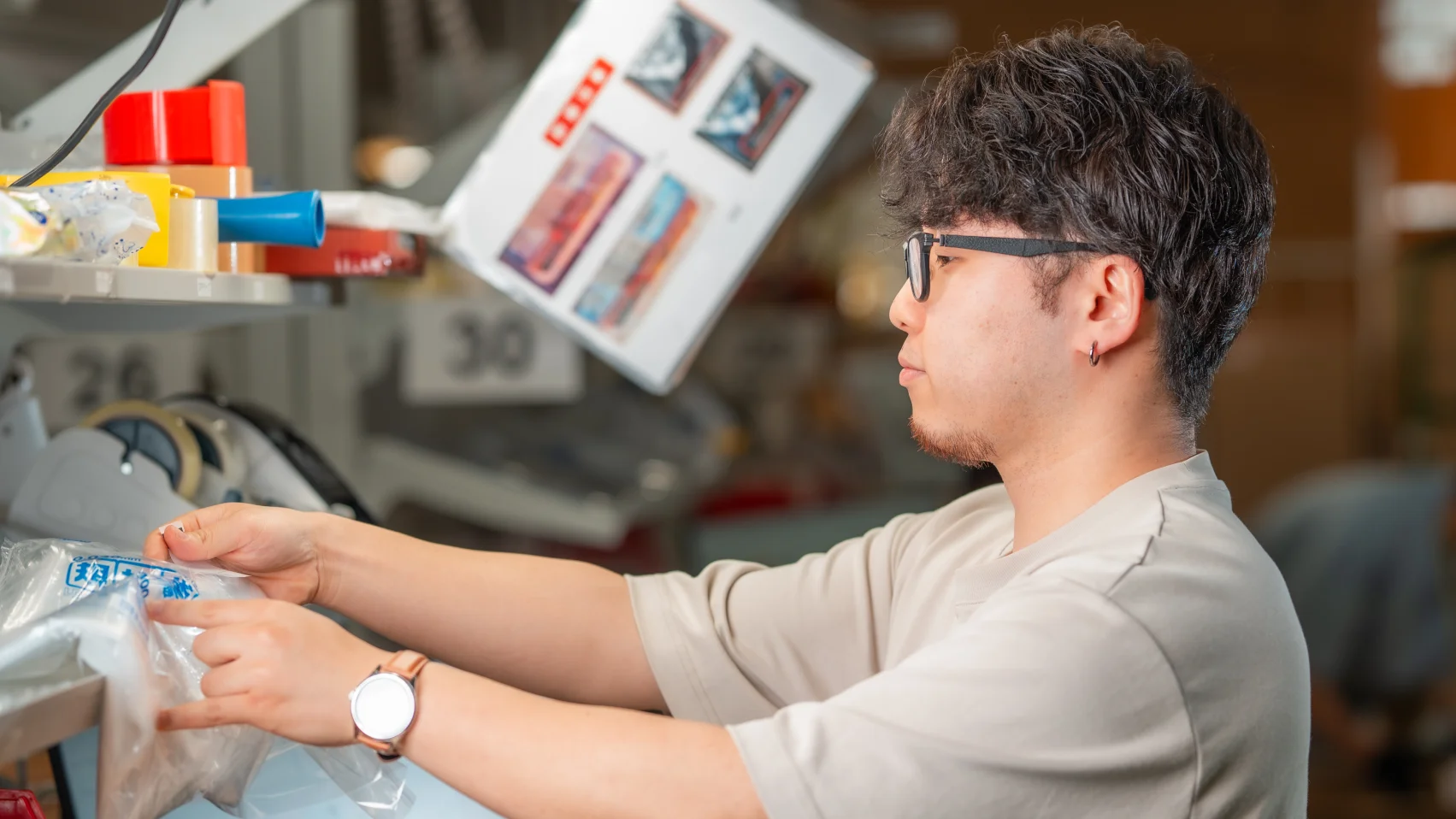
My day starts with checking Slack messages. In the morning, I focus on supporting part-time staff, handling and creating tickets, and checking package statuses and shelf registrations.
After lunch and a break, my afternoon involves following up on receiving, continuing to support part-time staff, and managing tickets. Toward the end of the day, I shift my focus to arranging the workstations and preparing for the next day, before clocking out.
Between these tasks, I also assist part-time staff and resolve or create tickets. Other tasks include managing productivity, guiding part-time staff, resolving mistakes, proposing improvements, streamlining and automating operations, and analyzing data.
While the basic flow is somewhat fixed, irregular tasks occur frequently. The main irregular tasks are responding when there are damaged items or issues. When called, I go to the site to check and respond, so I perform a wide range of tasks on the fly, not just desk work.
What is a commitment you value and “cannot compromise on” in your work?
My principles are to listen carefully to people’s opinions and stories, thoroughly explain the intent and reasons behind decisions, and make judgments based on facts after weighing the pros and cons. Based on past experiences, I make a conscious effort to stay calm and listen to others even when my own emotions are running high. Also, when giving instructions, I always try to communicate the intent behind why I am asking for something, or why I am expressing a certain opinion. And what I value most is face-to-face communication. With just written text like Slack, detailed intentions, enthusiasm, and nuances can be hard to convey, and it can sometimes be interpreted in unintended ways, so I try to communicate face-to-face as much as possible, check my team members’ expressions, and then follow up by sending the information again in writing.
Is there anything the team is conscious of to get through the busy season?
We make sure to communicate clearly face-to-face, while supporting each other’s work and cooperating closely.

Could you tell us about the “uniqueness of the products handled” unique to cross-border e-commerce? Are there any products that surprised you?
I feel that handling a wide variety of products, from antiques you wouldn’t normally see — like suits of armor— to car parts, anime goods, and retro toys, is truly unique to cross-border e-commerce. I used to think that a general logistics warehouse specialized in a certain genre of products, but there are truly things here I have never seen before. Being able to actually see and hold things like armor, which you might know exists but rarely get the chance to see in person, is definitely unique to this industry.
When do you realize that you are “connected to the world” in your daily work?

When I see requests coming from customers in various languages, I realize that I am working with customers all over the world. Also, when customers send photos for damage reports, I can catch a glimpse of various living environments and situations in the background that you don’t see in Japan, which also makes me feel connected. Furthermore, the customer support team translates the contents into milder expressions for us, but I sometimes purposely translate the original text because I want to know the actual emotional temperature of the customer. When I do, I can see differences in nuances, like how they express their requests quite directly or with incredible passion, and I realize our global connection at those times as well.
Is there a gap between the general image of a warehouse and the actual site of ZenGroup?
I had an image of the warehouse industry performing somewhat fixed, repetitive tasks, but because the ZenGroup workplace handles a wide variety of products for customers all over the world, good and bad things happen every day, which differed from my original expectations. However, precisely because the methods and contents are quite different from a general logistics warehouse, everyone starts from scratch regardless of their previous experience. I was able to work together with my peers at the same pace, so I didn’t feel much of a hurdle after joining.
Could you tell us about the workplace environment and atmosphere?
As for the atmosphere among full-time employees, we work together as a team, happily communicating every day—sometimes debating, sometimes worrying together, and sometimes joking around while doing our respective tasks. When you include the part-time staff, I think it is a lively workplace where anyone can frankly express their opinions regardless of their position. However, precisely because it is an environment where various opinions fly around, there are times when I feel the difficulty of management in bringing all of the moving parts together. Also, the atmosphere differs depending on the warehouse. But what can be said in common is that it is a flat, non-hierarchical environment where anyone can easily share opinions and ideas. And personally, I’m happy that the company provides unlimited free beverages. Since I drink a massive amount of fluids in a day, it’s a huge help (laughs).
What do you feel you have grown in since joining ZenGroup?
One way I’ve grown is in my communication with people. Since there are a large number of part-time staff as well as full-time employees, it is necessary to communicate differently with different types of staff, while ensuring that it also looks fair to other staff. I feel that becoming able to do this is a sign of how much I have grown since joining the company.
Has ZenGroup supported you to boost your growth?
There are English classes, and they provide support for learning. I was participating online, but it was a bit difficult, and I ended up giving up (laughs). But even in the warehouses, there is an atmosphere that makes it easy to participate in such classes.
What do you think is “good” about ZenGroup?
Their stance is not conservative, but rather they strive to constantly adopt new things and improved methods. So if you propose new technologies or ideas, there is a high possibility they will be adopted and introduced. For better or worse, the systems and work contents are unique, so if you propose, “Why don’t we do it this way?”, and discuss it with everyone, they will implement more and more new ideas. Since I tend to be the type of person to speak up about various things, I am happy that this environment fits my personality very well.