Our Inside Scoop series gives you a closer look at what life at ZenGroup is really like.
For this edition, we brought together four women who lead very different teams across ZenGroup. They shared their experiences of what they find rewarding about leadership, the challenges they face, and what they keep in mind when working in a multicultural environment.
This is Part 1 of a two-part series featuring their perspectives and experiences.

Meet the Four Leaders
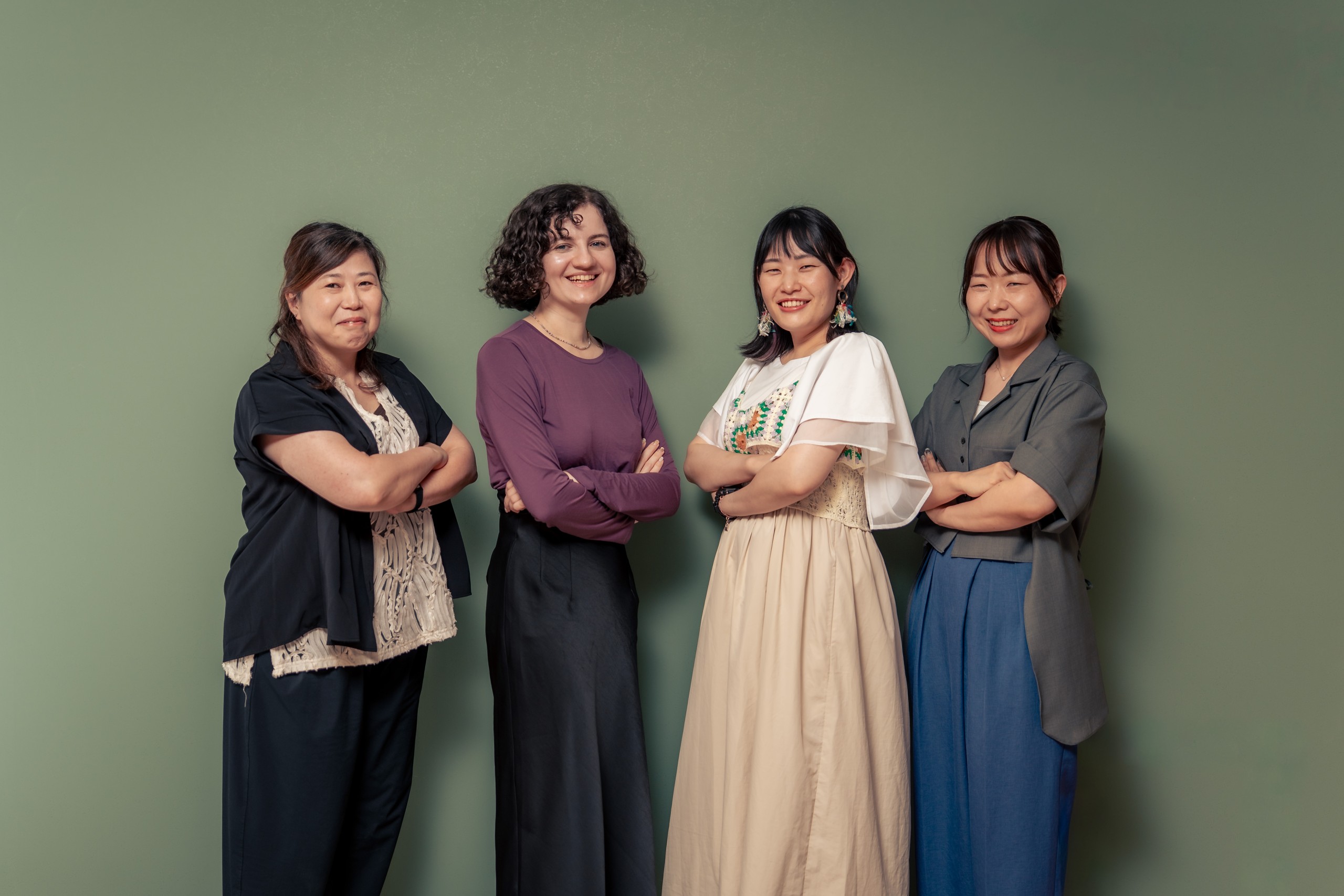
Dzvinka | Marketing
Dzvinka leads the ZenMarket marketing team, which brings together members from a wide range of countries and regions.
Shihori | Purchasing
Shihori leads a team responsible for the purchasing process, from placing orders all the way through to delivery at our warehouse in Japan. She also works on improving workflows and building systems that help the team operate more effectively.
Nana|Accounting
Nana leads the accounting team while working to strengthen processes and team operations as part of ZenGroup’s IPO preparations.
Riho|HR
Riho leads the Labor Relations and Employee Assessment teams, helping shape ZenGroup’s organization and work environment for people from diverse backgrounds.
What Makes Leadership Rewarding?
We started by asking a simple question: “When do you find being a leader most rewarding?” Each of the four had a different answer.
Dzvinka: “What I find most rewarding is seeing team members grow. They gain experience, and eventually some of them move into management roles themselves. It makes me really happy to see that kind of growth.”
While Dzvinka talked about seeing her team members grow, Nana shared a moment when she noticed a change in the way her team approached their work.
Nana: “As part of our IPO preparations, I sometimes have to introduce checks that we didn’t need before and ask the team to start following them. I thought they probably saw me as the person who was always nagging them about things. But then one of the team members came to me and said, ‘Shouldn’t we add a check here too?’ That made me really happy because it showed that they understood why the checks were necessary and were taking the initiative themselves.”

For Shihori, one of the most rewarding moments is when everything comes together and the team’s work runs smoothly.
Shihori: “As our workload grows, I’m thinking about how we can use automation and training to expand what the team can handle as a whole. Different people are motivated by different things, and there isn’t one right answer. But when the work is running smoothly and everyone can head home in a good mood, that makes me happy.”
Riho also talked about how working as a team can raise the quality of the work itself.
Riho: “Some of the work I used to handle entirely on my own is now being taken on by other team members, and our next challenge is to improve the quality even further. They improve things I never would have thought of myself, including areas I wasn’t particularly good at. I find it really interesting that, as a team, we can achieve things I could never have done alone.”
What’s Challenging About Being a Leader?

We also asked the four leaders about the challenges they face in their roles.
Dzvinka’s marketing team grew from around 20 people to more than 40 in less than a year. Alongside working toward KPIs, the team has been onboarding new members and developing processes that can work effectively at a larger scale.
Dzvinka: “Marketing strategies differ depending on the country, language, and channel. Bringing all those different perspectives together and moving in one direction is still challenging. I try to listen to what team members have to say and keep improving the way we work.”
Nana: “Understanding something yourself and explaining it in a way that someone else can understand and agree with are two different things.
If I want to make sure the team and I are on the same page, I need to understand something well enough to explain it clearly in my own words.”
Shihori: “When things stay busy, we still need to deliver results while paying attention to each person’s well-being and motivation. I think about how we can strengthen the team as a whole—for example, by breaking down tasks and identifying more work that can be delegated to other team members.”
After moving from an individual contributor role into management, Riho began to see how important it was to explain the reasoning behind decisions.
Riho: “When I was working on my own, there were probably things I did more intuitively. But when you’re working with a team, you need to have a clear rationale for why you do things a certain way. Sometimes, when I try to explain my reasoning, I realize there actually wasn’t a logical reason behind a particular way of doing things that I had been attached to.”
What’s It Really Like to Work in a Multicultural Environment?
If you’re considering working at ZenGroup, you might be wondering what communication is like in such a multicultural workplace.
Shihori’s team is primarily made up of Japanese members, but her work gives her plenty of opportunities to communicate with colleagues of different nationalities.
Shihori: “Sometimes, when we communicate internally, there are expressions that Japanese colleagues might understand from context but that aren’t as clear to colleagues from other countries. So I try to keep things concise and communicate the key points clearly. And when I do that, I find that the message becomes easier for Japanese colleagues to understand too.”

Dzvinka leads a multicultural team and says that differences in language and culture can sometimes lead to misunderstandings.
Dzvinka: “We speak different languages and come from different cultures, so misunderstandings do happen. But if you start from the assumption that the other person wasn’t trying to be rude or hurtful, you can talk things through and resolve the issue. I think it’s important not to immediately assume the worst about what someone meant.”
For Riho, it’s also important to question her own assumptions about what is “normal” or “obvious.”
Riho: “I’ve realized that there really isn’t one universal idea of what’s ‘normal’ or ‘obvious.’ As you gain experience, it’s easy to start thinking in patterns: ‘This happened before, so it’ll probably happen the same way this time.’ That’s why I try to stay aware of my own assumptions and biases. For example, I sometimes ask myself: if I were part of a very small minority in a meeting, would I still feel as confident speaking up as I do now?”
Closing Thoughts
So, what’s it really like to lead a multicultural team? One thing that came through in our conversation was that there isn’t a single special formula for managing a diverse team.
Communicating clearly. Not making assumptions about someone’s intentions. Questioning your own idea of what’s “normal.” And taking the time to understand each team member’s situation and perspective. It’s these everyday habits that can help people with different backgrounds work together as a team.
But how did these four leaders get to where they are today? In Part 2, we’ll explore their career journeys, how their roles have evolved at ZenGroup, and their experiences of building careers as women.
Stay tuned for Part 2!